Cigarette filter rods explained: mono acetate, charcoal, recessed, hollow and capsule
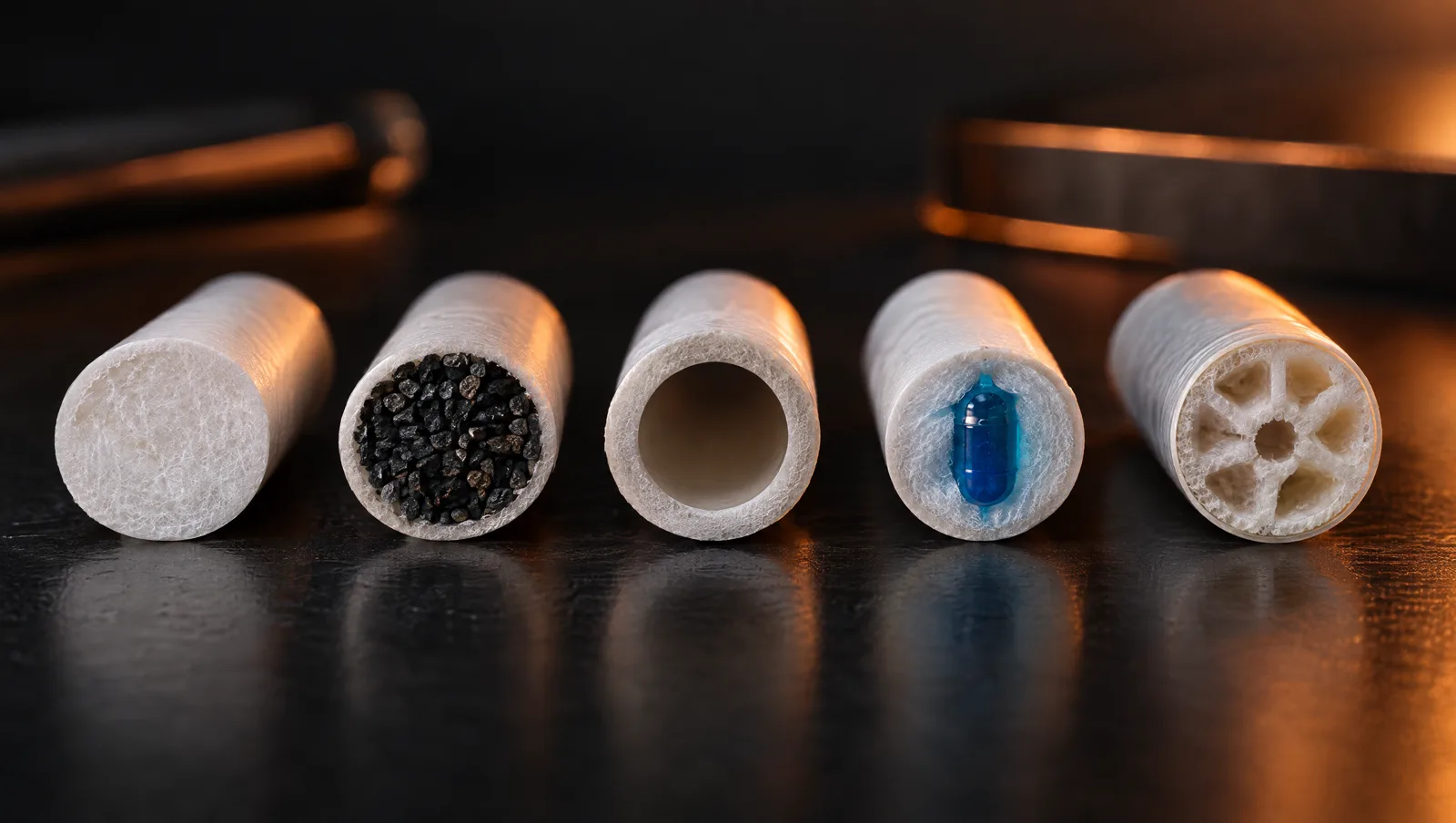
The filter is the part of the cigarette the consumer notices first and judges last. It sets the draw, moderates the strength and, with a capsule or a flavour thread, becomes a product feature in its own right. For a factory, the filter rod is also the component that most often stops the line when it is out of specification. This article explains the main rod constructions, what they are for and what to agree with your supplier before the first container arrives.
How a filter rod is made
Almost all cigarette filters are made from cellulose acetate tow: a crimped bundle of thousands of continuous filaments. On the rod maker the tow is bloomed, sprayed with a plasticiser (triacetin), wrapped in plugwrap paper, glued along the seam and cut into rods, typically 108 mm long. The plasticiser bonds the filaments so that the rod becomes firm within hours. On the cigarette maker's filter assembler the rod is cut into four or six tips, each joined to a cigarette with tipping paper.
Three parameters are decided at the rod maker and cannot be corrected later: circumference, pressure drop and hardness. A fourth, the plugwrap, decides how the filter feels and how ventilation behaves.
Mono acetate rods
The standard filter. One segment of acetate tow in a plugwrap, available in every circumference from super slim to king size. Pressure drop is controlled by the tow item (denier per filament and total denier) and the amount of tow per rod. Mono acetate rods are the cheapest to make and the most forgiving on the assembler.
Use them when the product is a conventional cigarette and you want the lowest cost per thousand with reliable running. Specify the pressure drop with a tolerance, the hardness and the plugwrap porosity.
Charcoal (activated carbon) rods
A dual rod has an acetate segment and a segment of acetate with activated carbon granules embedded in the tow; a triple rod adds a second plain segment so the carbon never touches the lips or the tobacco. Carbon adsorbs part of the gas-phase components of the smoke and gives a smoother, drier taste that many Asian and Middle Eastern markets prefer.
Charcoal rods cost more, are more sensitive to moisture and need a plugwrap that keeps the granules in place. Ask for the carbon loading in milligrams per filter and the segment lengths, and run samples before committing, because the taste change is noticeable.
Recessed rods
A recessed filter has an open cavity at the mouth end, formed by a short tube segment or by a cavity in the rod. The cavity cools the smoke slightly and gives the product a premium look when the consumer glances at the filter end. Recessed rods are common in king size premium brands.
The cavity depth and the firmness of the tube are the critical parameters; too soft a tube collapses in the pack.
Hollow tube rods
Here a segment of the filter is a firm acetate or paper tube with a large central hole. The tube cools the smoke and creates a visual effect; combined with a plain acetate segment it also lowers the total pressure drop without lowering filtration in the solid segment. Hollow tubes are popular in slim and super slim formats where a solid filter would be too tight.
Capsule rods
A capsule rod contains one or two small spheres of flavour oil in a food-grade shell, inserted into the acetate at the rod maker. The consumer crushes the capsule to release menthol, mint or a fruit flavour. Single and double capsule designs exist for king size and queen size diameters, usually in capsules of 3.0 to 3.5 mm.
Two things decide whether a capsule product works: the capsule must survive the rod maker and transport without breaking, and it must sit at a consistent position so that it is under the tipping paper where the consumer expects it. Specify capsule diameter, flavour, position from the mouth end and the burst-strength range. Note that cigarettes with a characterising flavour, including menthol capsules, are prohibited in the European Union; capsule products remain legal in many other markets.
Flavoured rods and threads
Instead of a capsule, flavour can be sprayed on the tow or carried by a flavoured thread running through the filter. Thread filters give a steady, lighter flavour and are cheaper than capsules. The flavour has to be stable in storage, so ask for the shelf life and the packaging that protects it.
Which rod for which product
| Product | Typical rod |
|---|---|
| Value king size, 7.75–7.9 mm | Mono acetate, 108 mm, PD around 240 mm WG |
| Queen size / demi slim, 6.65 mm | Mono acetate, 108 mm, PD around 300 mm WG |
| Super slim, 5.4 mm | Mono acetate or hollow tube, higher PD |
| Smooth premium | Charcoal dual or triple rod |
| Premium appearance | Recessed or hollow tube |
| Flavour product (outside the EU) | Capsule or thread rod |
Before you order
Agree the specification in writing: length, circumference or diameter, pressure drop with tolerance, hardness, ventilation if any, plugwrap type and porosity, tow item, packing per tray and per case. Ask for samples from the same manufacturer that will produce the container and run them on your assembler at production speed. A rod that runs cleanly at 4,000 cigarettes per minute is worth a few cents more per thousand than one that does not.
Tabaxis supplies all rod constructions described here from several manufacturers and delivers them DDP to factories in the European Union and the Eurasian Economic Union from one container. Send us your format and we will propose the rod and the samples.
Related products
Filter rods
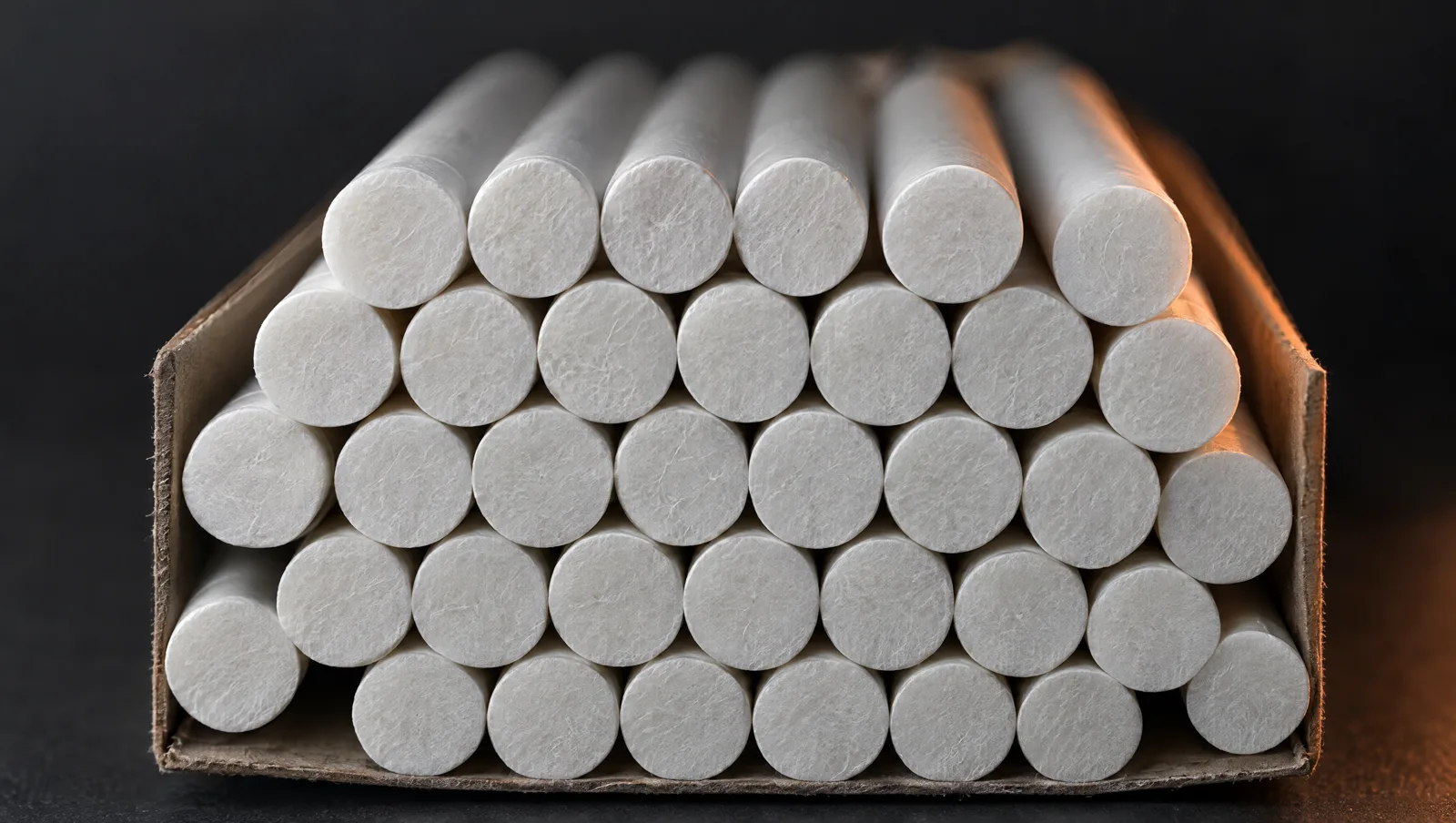
Mono acetate, charcoal, recessed, hollow tube and capsule filter rods in any length, diameter and pressure drop.
Learn more
Flavour capsules
Crushable flavour capsules for capsule filter rods: menthol, mint, berry and custom flavours in standard diameters.
Learn more
Tipping paper
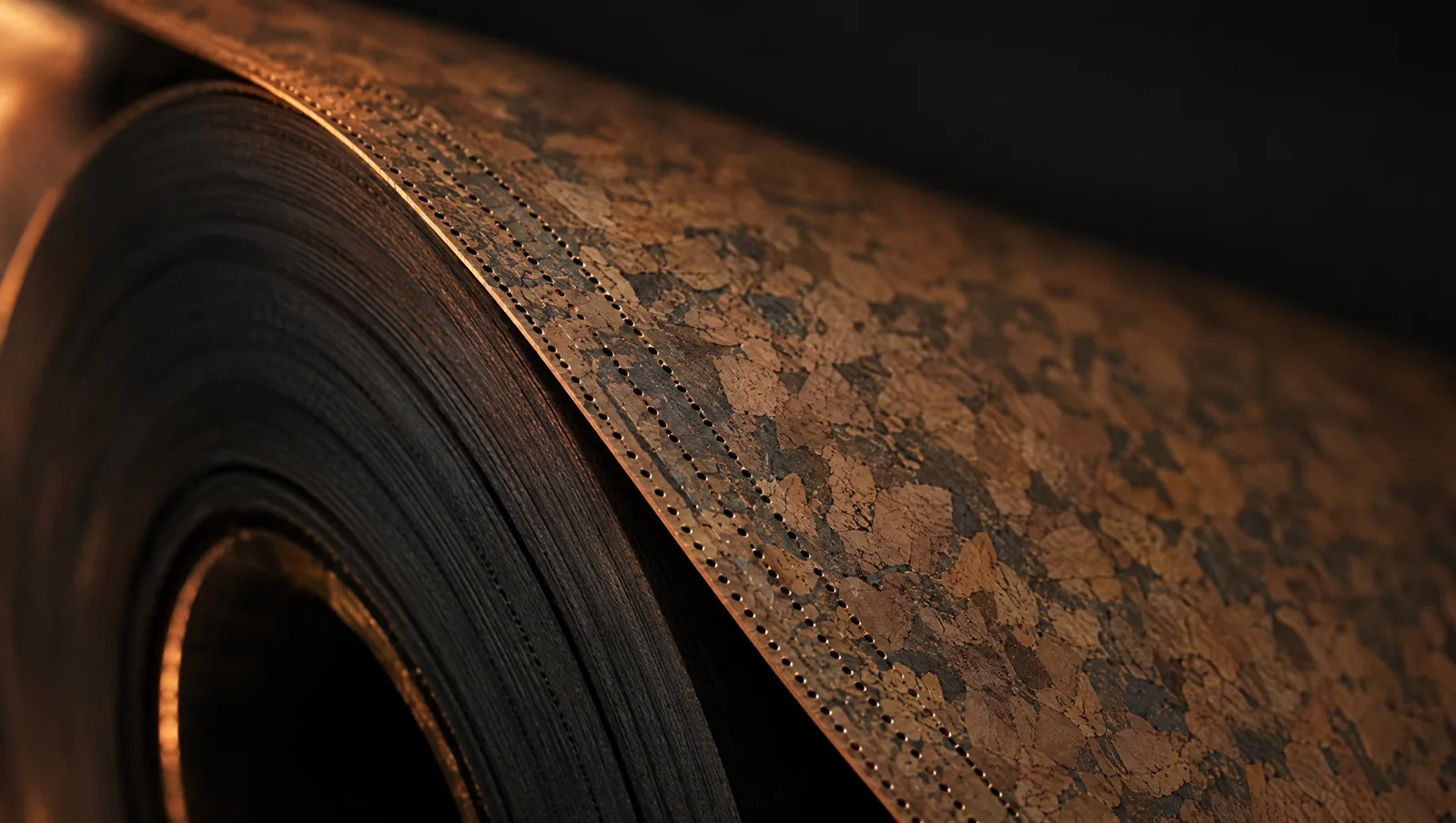
Cork, white and printed tipping paper in any width and basis weight, with perforation to your ventilation target and your brand design.
Learn moreMore articles

How to specify a filter rod: length, circumference, pressure drop, ventilation and plugwrap
A practical checklist of the parameters a cigarette factory should state when ordering acetate filter rods, with typical values and the tests behind them.

How to choose cigarette paper: basis weight, permeability, LIP and burn additives
The four cigarette paper parameters that change how a cigarette burns and tastes, and how to match them to your blend, your machine and your market.
Tipping paper: designs, perforation and compatibility with plugwrap and adhesive
What tipping paper does on the cigarette, the options for design and perforation, and why paper, plugwrap and adhesive must be specified together.