Mark 8 or Mark 9: which cigarette making machine fits your factory
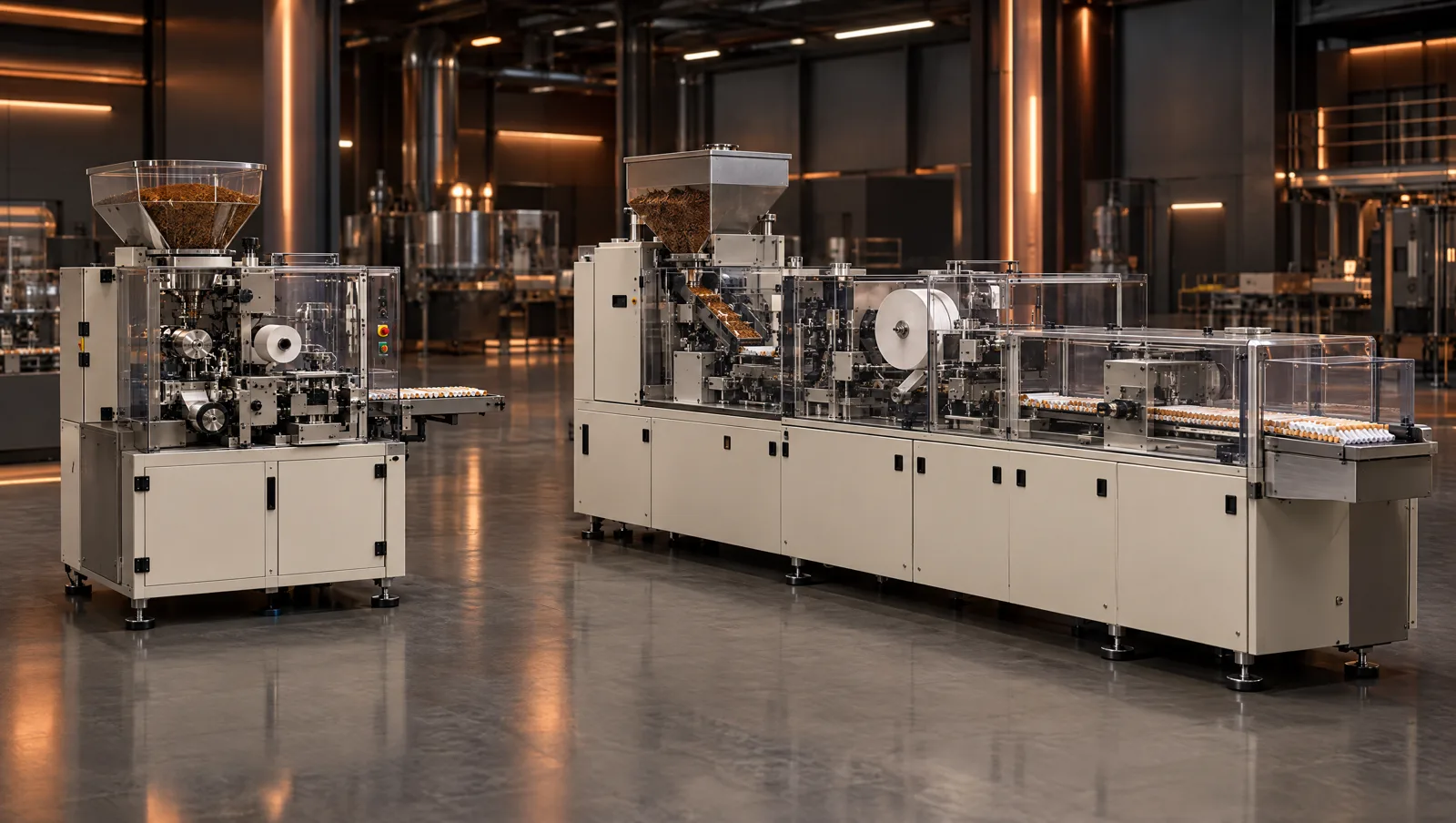
Two designs from the English manufacturer Molins, the Mark 8 of 1959 and the Mark 9 of 1972, still define the equipment of most small and medium cigarette factories. They were copied, rebuilt and modernised by manufacturers in India, China and Indonesia, and new machines built to these prototypes are available today with modern controls. The question we hear most often from factory owners is which of the two to buy. The answer depends on volume, formats and people.
What the two machines have in common
Both are single-rod makers: tobacco is fed from a hopper, formed into a continuous rod on a garniture tape, wrapped in cigarette paper, sealed and cut. Both are normally sold with a filter assembler (MAX 3 or MAX 5 for the Mark 8, MAX S for the Mark 9) that joins double-length filter plugs to the cigarettes with tipping paper. Both can be converted between formats by changing the garniture, the format tape, the cutting parts and the end discs. Both are mechanically simple enough for a factory's own mechanics to maintain.
Mark 8: 2,500 to 3,000 cigarettes per minute
The Mark 8 is the smaller and cheaper machine. New builds with a MAX 3 or MAX 5 assembler reach about 2,500 to 3,000 filter cigarettes per minute, roughly 1 to 1.3 million cigarettes per eight-hour shift at good efficiency. Its strengths are a low purchase price, a small footprint and a huge pool of mechanics who know it. Its weakness is speed: if your market grows, you will need a second machine and a second operator.
Choose the Mark 8 if you are starting production, if you produce several small brands with frequent format changes, or if labour is cheap and capital is scarce.
Mark 9 and MK9-5: 4,000 to 5,000 cigarettes per minute
The Mark 9 roughly doubles the output. Modern MK9-5 builds with a MAX S assembler and an automatic tray filler run at 4,000 to 5,000 cigarettes per minute, about 2 million per shift, and are offered with a double printer, microwave weight control and automatic bobbin changers with splicing for paper and tipping. One operator and one mechanic handle a line that would need two Mark 8s.
Choose the Mark 9 if your volume is above roughly 30 to 40 million cigarettes per month on one format, or if you want the weight control and printing options that keep quality constant at speed.
Beyond the Mark 9: Protos class lines
For factories with volumes above 100 million cigarettes per month, high-speed makers of the Protos class run at 7,000 to 10,000 cigarettes per minute. They need a stable format, well-trained staff, consistent materials (filter rods and paper that behave at speed) and a serious spare parts budget. The cost per thousand cigarettes can be lower than with three Mark 9 lines, but the flexibility is lower too. We help factories compare both options with real numbers.
Format changes
A format change on a Mark 8 or Mark 9 means changing the garniture, the format tape, the knife parts and the end discs; on the assembler the tipping rollers and cutting parts. With a trained crew it takes a few hours. Conversion kits are available for the common formats (king size, queen size, slim, super slim); specify the formats you plan to run when you order the machine so the kits come with it.
Spare parts and consumables
Format tapes, suction tapes, knives, glue nozzles and printing wheels are consumed in operation. The Mark 8 has the widest availability of parts anywhere in the world; the Mark 9 is close behind. Ask for the spare parts catalogue with the machine and order the first-year kit at the same time; the kit costs little against a week of downtime.
Utilities and installation
Both machines need three-phase power (typically 380 V / 50 Hz), compressed air and dust extraction. Allow space for the tray filler and for operator access on both sides. Installation and commissioning by the supplier's technicians, with operator training, takes one to two weeks per line.
A quick decision table
| Question | Mark 8 | Mark 9 / MK9-5 | Protos class |
|---|---|---|---|
| Monthly volume per line | up to ~30 million | 30–80 million | 100 million + |
| Formats | many, frequent changes | few, occasional changes | one or two, stable |
| Operators per line | 1 + mechanic shared | 1 + mechanic | specialised crew |
| Purchase price | lowest | medium | high |
| Materials sensitivity | low | medium | high |
Tabaxis supplies new Mark 8 and Mark 9 type lines with MAX assemblers, HLP packers and the full packing chain, installs them and keeps the spare parts coming. If you are not sure which line fits, send us your monthly volumes and formats and we will prepare a comparison.
Related products
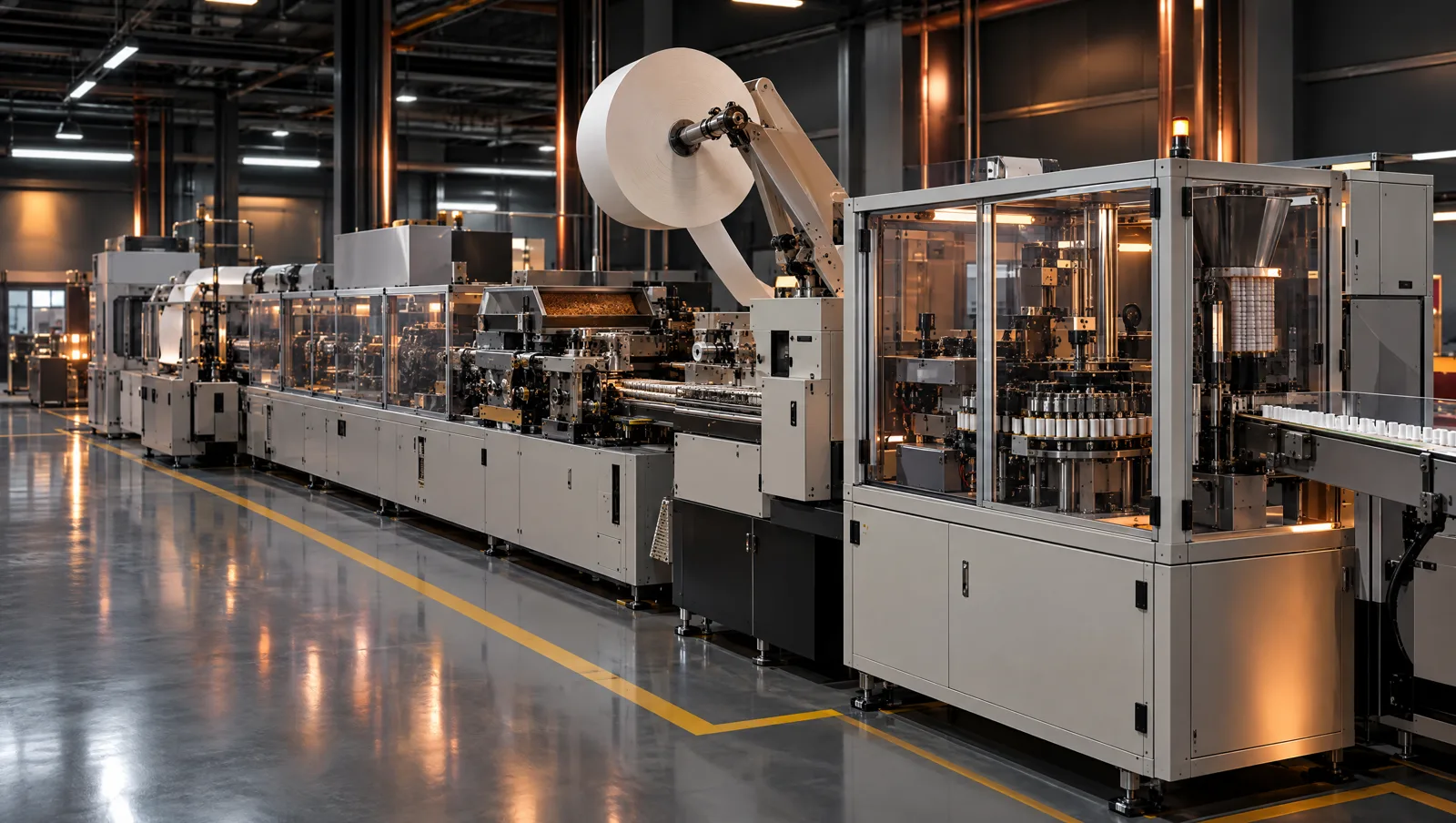
Cigarette making and packing machines
New Mark 8 and Mark 9 makers with MAX filter assemblers, high-speed lines up to 10,000 cigarettes per minute, HLP packers, wrappers, boxers and stampers.
Learn more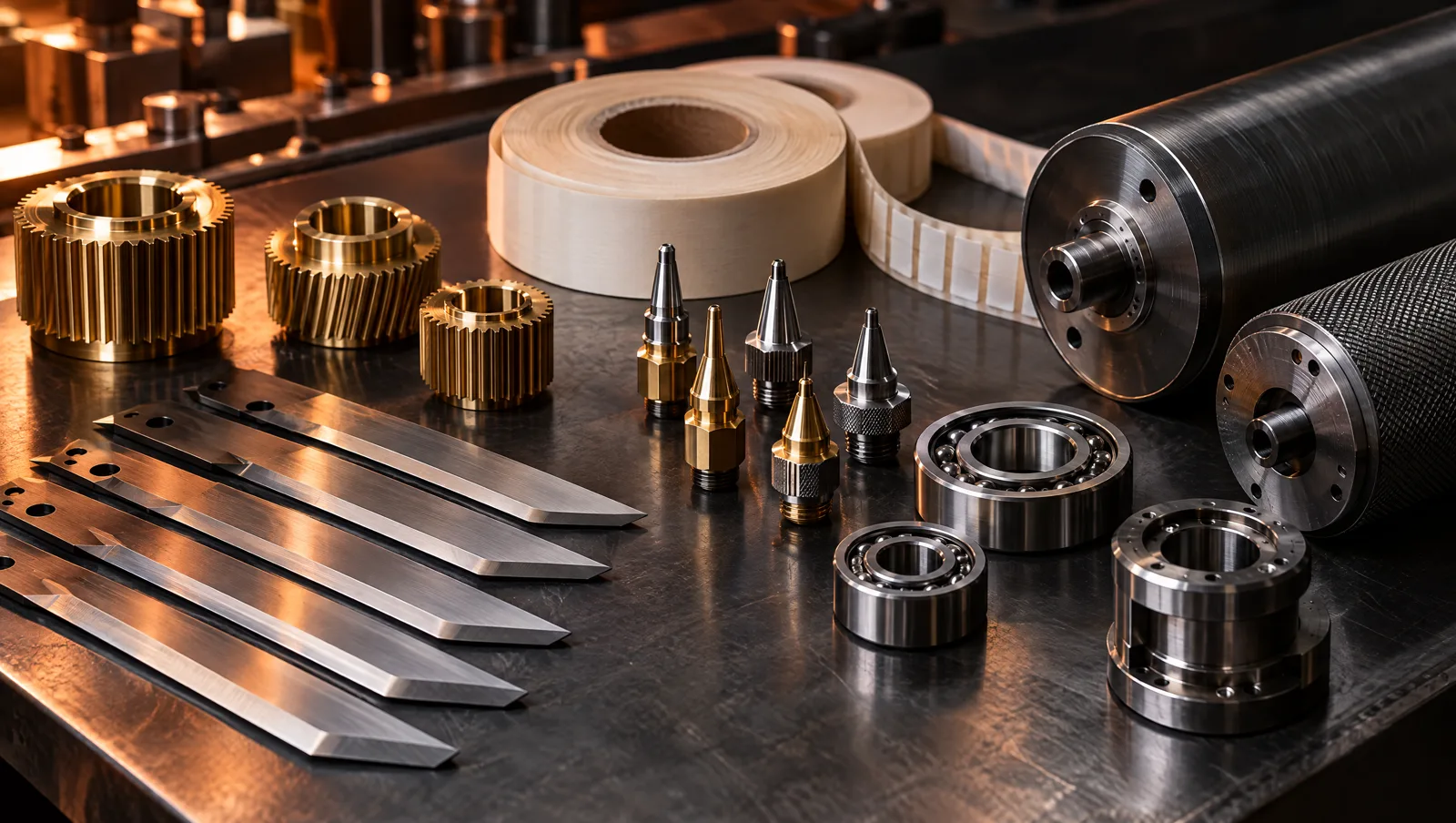
Spare parts and consumables
Wear parts and consumables for Mark 8, Mark 9, MAX III/5/15 and HLP-2 lines, identified by catalogue number and shipped within hours.
Learn more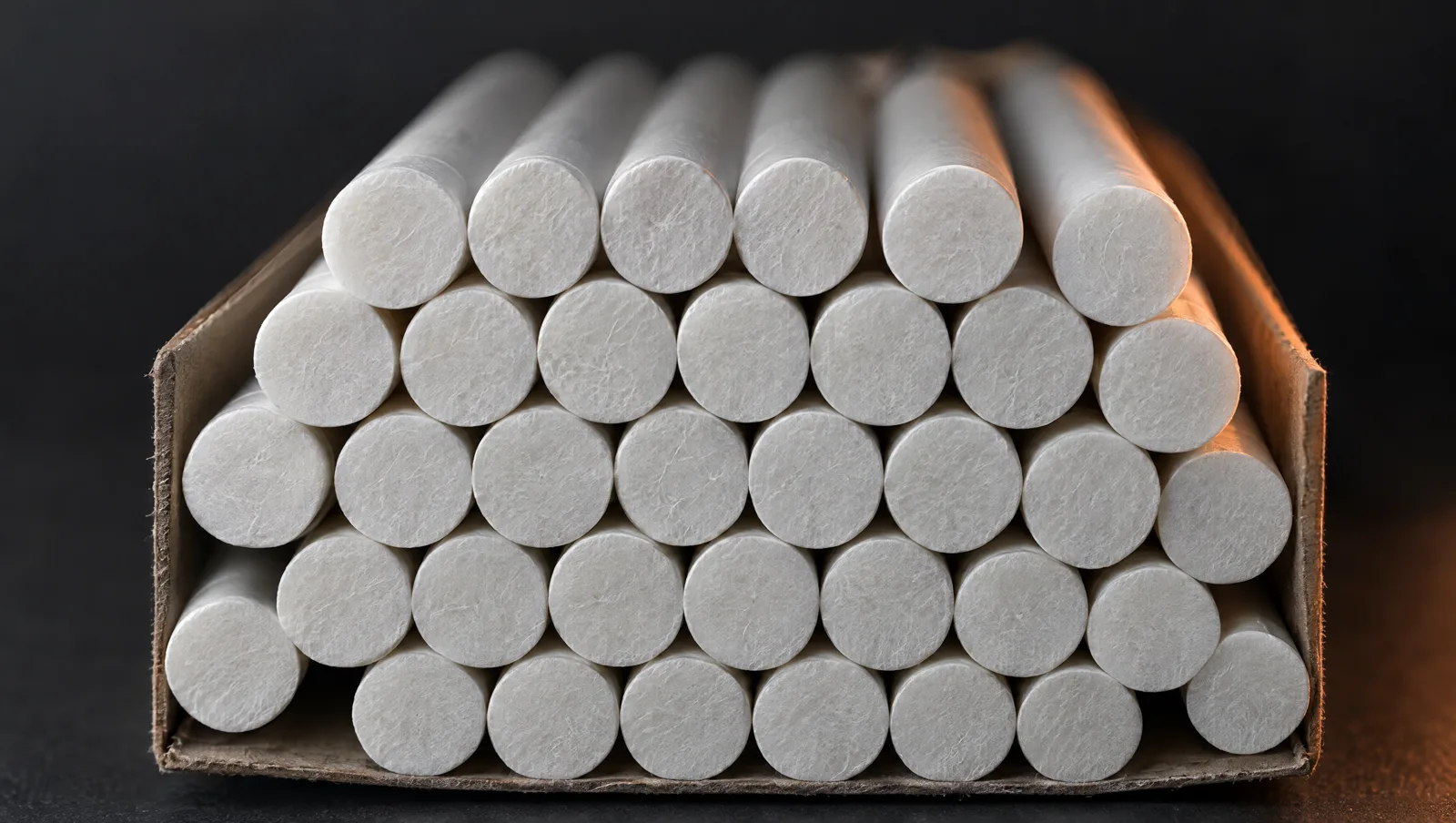
Filter rods
Mono acetate, charcoal, recessed, hollow tube and capsule filter rods in any length, diameter and pressure drop.
Learn moreMore articles
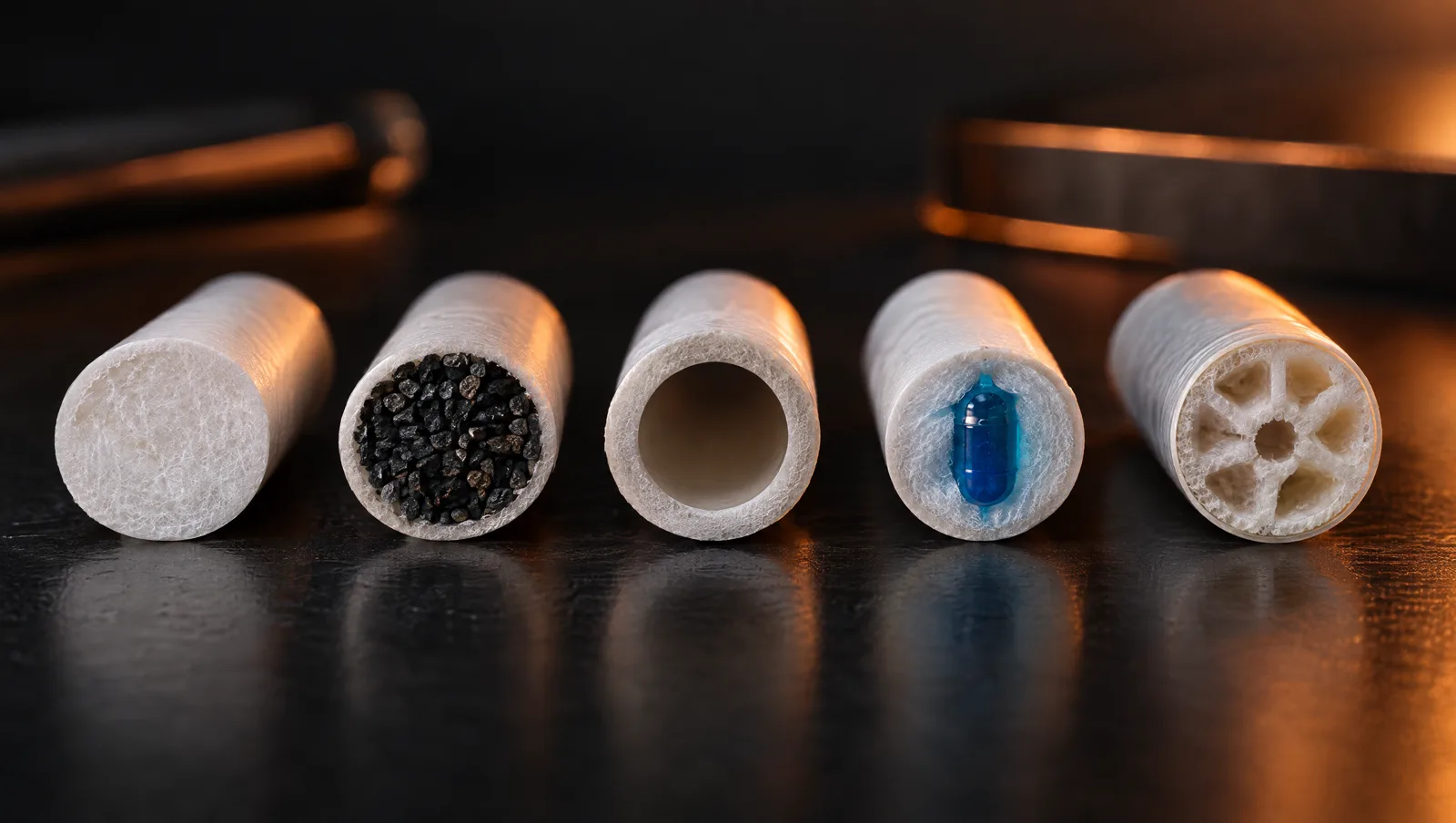
Cigarette filter rods explained: mono acetate, charcoal, recessed, hollow and capsule
What each type of cigarette filter rod does, where it is used and what to watch for when you specify it for your filter assembler.
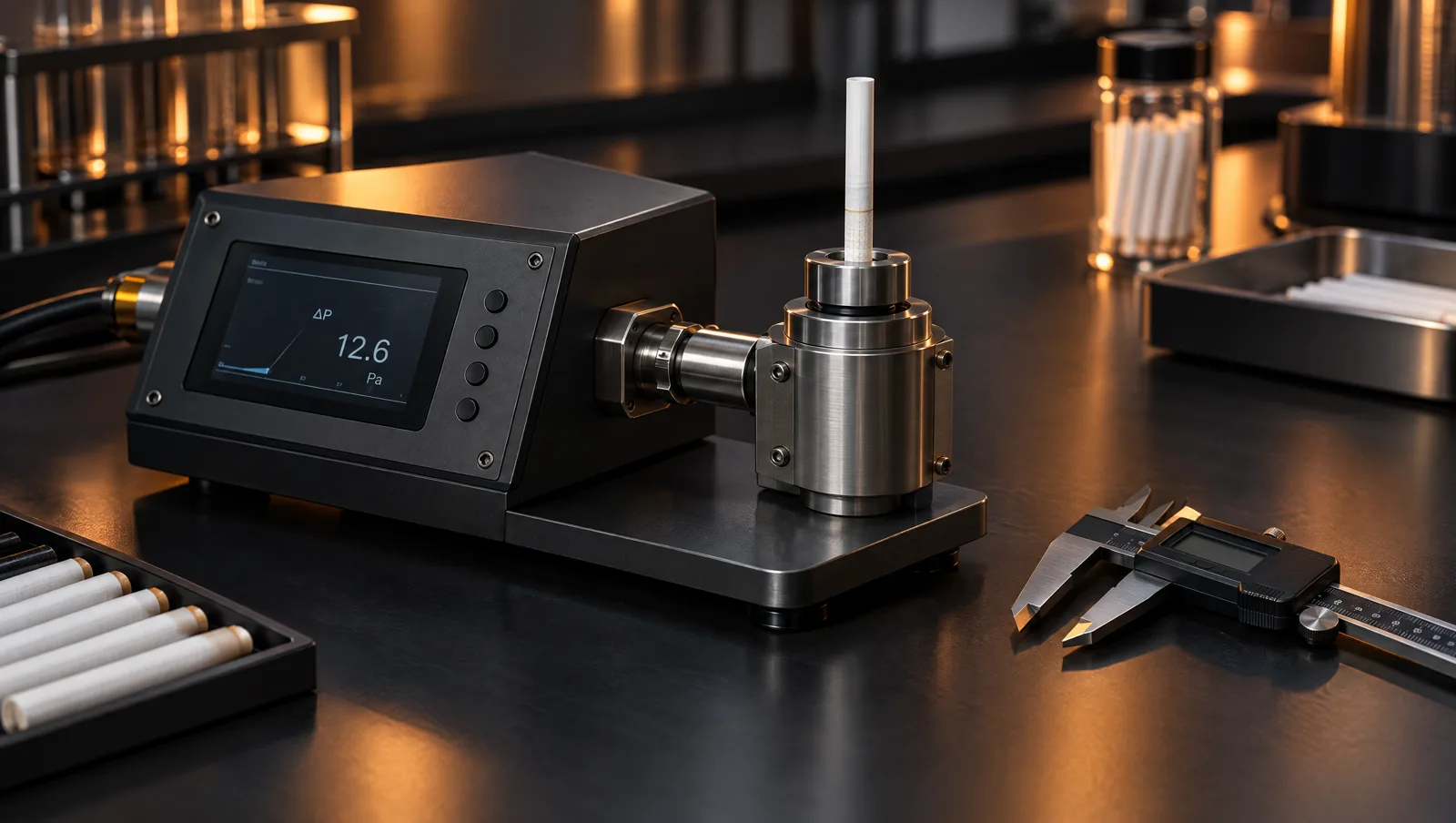
How to specify a filter rod: length, circumference, pressure drop, ventilation and plugwrap
A practical checklist of the parameters a cigarette factory should state when ordering acetate filter rods, with typical values and the tests behind them.
How to choose cigarette paper: basis weight, permeability, LIP and burn additives
The four cigarette paper parameters that change how a cigarette burns and tastes, and how to match them to your blend, your machine and your market.